How-To · Fur Handling
How to Skin a Raccoon (and Handle the Fur)
A step-by-step guide to case-skinning a raccoon, fleshing the hide, and stretching it so it's ready for the fur buyer, plus the Illinois rules to know.
Raccoon is the fur most Illinois trappers and coon hunters handle the most. A clean, well-fleshed coon is worth more than one that was rushed, and the steps aren't hard once you've done a few. Here's the standard cased-skinning method most fur buyers want.
Wear gloves
Raccoons can carry rabies, and their droppings can carry raccoon roundworm. Wear gloves, keep your knife and work area clean, and wash up when you're done. Don't skin a coon that acted sick or strange before you took it. Call IDNR or your local health department instead.
What you need
- Gloves
- A sharp skinning knife (a short blade with a gut hook is handy)
- A gambrel or cord to hang the coon
- A tail stripper or two sticks
- A fleshing beam and fleshing tool
- Raccoon-size wire or wooden stretchers
- Sawdust or cornmeal to soak up grease (optional)
How to skin a raccoon, step by step
- Let it dry and cool. If the coon came out of the water, let it drip and dry, then brush out mud and burrs. Skin as soon as you can once it's cool. A warm carcass left in a pile can slip fur.
- Hang it by the back feet. Use a gambrel or two cords at about chest height so you can work with both hands.
- Make the leg cuts. Cut around each back leg just above the foot. Then cut down the inside of each back leg, along the line where the belly fur meets the back fur, to the vent. Cut around the vent.
- Free the tail. Cut the skin around the base of the tail and work about two inches of tail bone loose. Clamp a tail stripper (or two sticks) on the bone and pull the bone out. Then split the underside of the tail all the way to the tip so it dries.
- Work the hide down. Peel the hide off the back legs, then pull it down over the body like a sock. Use your knife only where the hide sticks. Coons are fatty, so cut close to the carcass and leave the fat on the body, not the hide.
- Clear the front legs. Push each front leg out of the hide and cut around the wrist, or cut the foot off at the wrist and leave it in the hide if your buyer wants feet on. Ask before you skin.
- Do the head slowly. Cut the ears off close to the skull, then work around the eyes and lips carefully. Holes here hurt the price. Cut through the cartilage at the nose to finish.
- Flesh it. Pull the hide over a fleshing beam, leather side out, and push off the fat and meat with a fleshing tool, working from head to tail. Get all the fat. Fat left on a coon hide is what makes it go bad.
- Stretch and dry. Put the hide leather side out on a raccoon-size wire or wooden stretcher. Don't stretch it so long that it gets thin. Dry it in a cool, airy spot out of the sun and away from heat. Once the leather is dry, turn it fur side out if your buyer wants it that way.
Freezing instead of stretching
If you don't have time to flesh and stretch, you can freeze coons whole or freeze a green hide. Roll the hide fur side out, bag it airtight, and freeze it flat. Thaw it slowly before fleshing. Many fur buyers also take whole frozen animals, so ask what they want before you skin.
Illinois rules to know
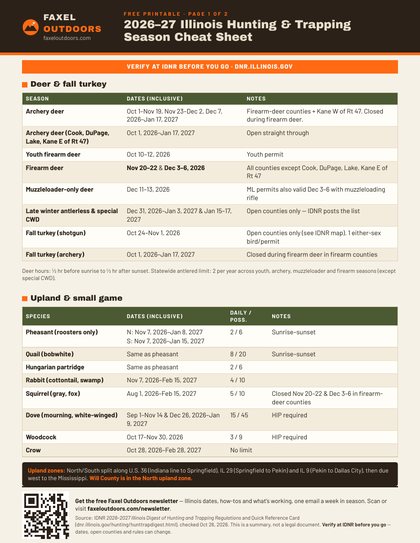
- Raccoon trapping and hunting runs Nov 10, 2026 to Feb 15, 2027, with no bag limit.
- Raccoon hunting closes during firearm deer season (Nov 20–22 and Dec 3–6) in counties open to firearm deer.
- To trap, you need a trapping license and a habitat stamp. To hunt, you need a hunting license and a habitat stamp, unless you're exempt.
- You can hunt raccoon at night on foot with a small hand-held light, but never from a vehicle.
- You can keep green (untanned) hides year-round with a valid hunting or trapping license.
- Road-killed raccoons can only be salvaged during the open season, and only if you hold the right license and stamp.
This is a summary, not legal advice. Always read the current 2026–27 Illinois Hunting and Trapping Digest before you go.
Gear that works
Some links on this page are affiliate links. If you buy through them, I may earn a small commission at no extra cost to you.
- Outdoor Edge WildSkin (Outdoor Edge)
Deep-bellied 4" skinning blade with a gut hook. - Grade B Fleshing Beam (Minnesota Trapline)
Hardwood beam (7" x 48") with cosmetic blemishes at a lower price. - Fleshing Tool (Minnesota Trapline)
Double-edged fleshing tool for raccoon, muskrat, and mink. - Top Lot Adjustable Raccoon Stretcher (Minnesota Trapline)
One adjustable board that fits small to large coon. - Aluminum Tail Stripper (Minnesota Trapline)
Pulls the tailbone clean without tearing the tail.